
Previous Story

Why should companies donate to non-profits? The key benefits explained.
Posted On 24 May 2026
Comment: 0
Societal engagement has now become an essential lever for performance for decision-makers concerned with their organisation’s impact on the economic and social ecosystem. Beyond simple philanthropy, sponsorship strategy relies on a nuanced understanding of financial stakes, particularly regarding donation caps to associations and the resulting tax reduction mechanisms. For a leader, transforming an intention of solidarity into a concrete action requires navigating between personal convictions and the optimisation of tax management. Far from being a mere gesture of generosity, this approach is part of a long-term vision where corporate social responsibility becomes a true driver of growth and sustainability for the organisation.
Deciding to make a corporate donation allows you to mobilise your organisation’s vital forces around meaningful projects, while durably strengthening your brand image. By exploring the benefits of corporate generosity, we will analyse how this practice fosters internal cohesion and boosts employee morale through shared causes. We will also address the strategic aspect of media visibility and the promotion of your corporate identity through sponsorship. Whether you are looking to optimise your tax position or to anchor your business within the local community, this insight will provide the keys to transforming your charitable support into a major asset for your corporate culture and public profile.
Community engagement is a cornerstone of many companies’ philosophies. Charitable donations provide a way for them to give back, while fundraising efforts bring people together around a shared cause. To discover what motivates companies to make monetary donations to non-profits, continue reading our article!
A personal motivation

Many people donate to organizations with which they have personal connections. For instance, someone with a family member battling cancer might commit to an association such as La ligue contre le cancer. An employee whose child has an intellectual disability might give to the Special Olympics. Consider surveying your employees to discover which organizations they support; this can help guide your corporate giving decisions.
A tax deduction
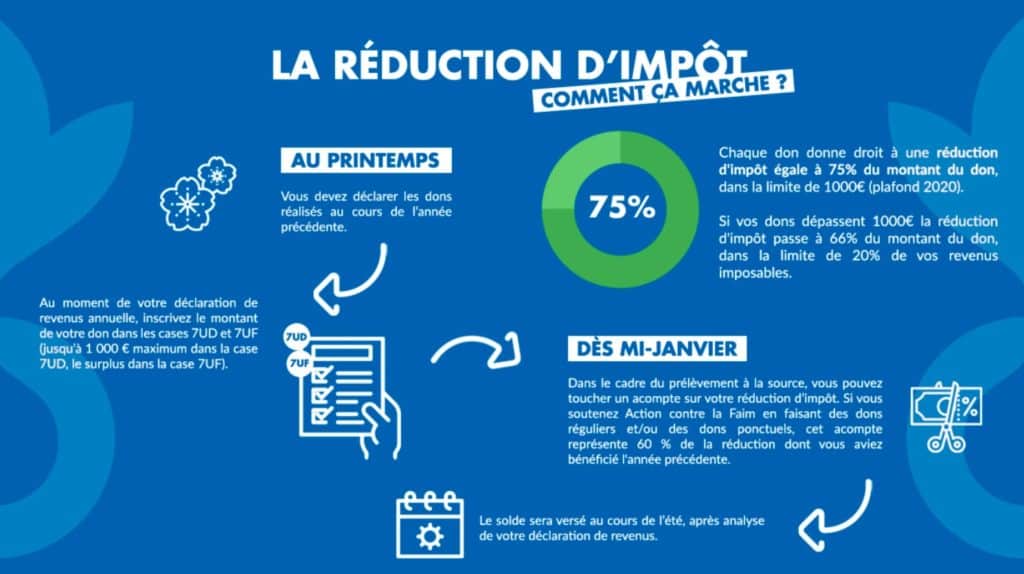
For a company, donating to one or more non-profit organizations can offer several advantages. First and foremost, it provides a tax benefit, as it triggers a 60% tax reduction on the donation amount, provided the contribution does not exceed €2 million. If the donation exceeds €2 million, the reduction is set at 40%, regardless of your tax regime. To learn more about the tax benefits for charitable donations, feel free to visit the dedicated pages on the Action contre la faim NGO website. This organization, which specializes in the fight against global hunger, has dedicated a page to explaining how donations can provide tax benefits.
Improved Morale
Employees feel a sense of fulfillment when they know their employer is truly committed to giving back to the community. Organizing an in-office fundraiser is an excellent way to foster camaraderie among staff and boost morale. Set fundraising goals and turn them into a friendly competition. The funds raised also serve as another way to engage with the charitable causes important to your employees, demonstrating that you care about their lives outside of the workplace.
Community Involvement
A company cannot thrive without the community and employees that surround and support it. Healthy communities drive healthy businesses. Your monetary donations can support causes that promote better health, fund medical research, supply food banks, or bolster organizations fighting poverty. Investing in non-profits is an investment in a better future for both your employees and your company.
Boosting Corporate Growth
Promoting your company is a positive side effect of actively participating in charitable donations. Sponsoring events through banners, t-shirts, or other branded merchandise helps increase your brand awareness. Furthermore, partnering with a non-profit allows your company to gain visibility through press releases and public displays. Consider allocating a portion of your marketing budget to charitable giving.
*Donating to a non-profit also offers management benefits, as it serves as a way to engage all your employees in a shared cause: mutual aid. This involvement will undoubtedly strengthen team cohesion and corporate culture.*
Key points to remember regarding donation limits to a charity
Supporting a social cause represents a major strategic lever for any organisation. Beyond simple generosity, corporate giving allows you to strengthen internal cohesion, boost your brand image, and benefit from significant tax advantages, all while complying with the regulations regarding donation limits to non-profit organisations. By investing in community projects, you transform your corporate social responsibility into a genuine driver of performance and well-being for your employees. This committed approach thus prepares the long-term future of your organisation.
Supporting a charitable cause represents far more than a simple gesture of generosity; it is a strategic lever capable of durably transforming your organisation’s identity. By choosing to make a corporate donation, you act on several fronts simultaneously: you strengthen employee engagement around strong human values, you optimise your tax position through statutory tax reductions, and you increase your brand visibility among new audiences. Whether driven by personal convictions or a desire to actively contribute to the vitality of your local ecosystem, every contribution becomes an investment in social cohesion and your company’s reputation. When driven by a clear vision, this commitment transforms corporate social responsibility into a genuine driver of growth and shared pride.
Beyond the immediate benefits to team morale or the promotion of your brand image, corporate philanthropy invites us to rethink the role of the company in modern society. By integrating patronage into the heart of your management culture, you create a virtuous circle where economic success directly feeds social progress and solidarity. To transform this intention into an effective and sustainable patronage strategy, it may be worthwhile to analyse your employees’ situation and study the various forms of support possible, whether monetary or logistical. Taking the time to structure these initiatives ensures that every act of support delivers real value, both for the beneficiaries of the associations and for the long-term sustainability of your own entrepreneurial project.