
Previous Story
Mobile Banking and Smartphone Authentication: What You Need to Know to Secure Business Payments
Posted On 31 Jul 2026
Comment: 0
At Newzy Executive, digital trends within the business world are closely monitored, particularly when they impact financial management. Mobile banking and smartphone security have emerged as critical issues for professionals today., as transactions increasingly shift toward mobile applications. Balancing convenience with exposure to risks, the smartphone has become a fully-fledged payment tool. Newzy Executive analyzes the mechanisms, vulnerabilities, and best practices to help users better navigate this environment.
Smartphone-validated payments offer undeniable time savings, but they also demand rigorous discipline. Behind every transaction lies a security architecture that often goes unnoticed. Understanding these mechanisms allows for a concrete reduction of daily risks.
What are the primary risks associated with mobile banking on smartphones?

While mobile banking relies on robust security systems, it remains vulnerable to well-documented threats. Mobile phishing is among the most widespread. It takes the form of messages or emails mimicking official banking communications, tricking users into disclosing their login credentials.
Another common risk is the installation of fraudulent applications. Some mimic official interfaces with deceptive precision. Once installed, they can intercept sensitive data or record keystrokes. Public Wi-Fi networks also represent a significant vulnerability. A compromised network can allow a third party to intercept communications, particularly during payment authentication.
Spyware, which is more discreet, is sometimes installed without the user’s knowledge. It exploits system vulnerabilities or excessive permissions granted to certain applications. In this landscape, social engineering plays a decisive role: cybercriminals often rely on distraction or misplaced trust to bypass technical security measures.
Here are several high-risk practices that are often underestimated:
- Installing applications from outside official app stores
- Report system updates
- Clicking on links without verification
- Using an unlocked smartphone
Newzy Executive reminds us that these vulnerabilities are not solely technical; they are often linked to user habits. Human vigilance remains a decisive factor in overall security.
How does smartphone payment validation work?
Payment validation now relies on Strong Customer Authentication, also known as SCA. This mechanism combines several factors to ensure that the user is indeed the one initiating the transaction. Mobile banking and smartphone security generally rely on three types of factors: something you know, something you have, and something you are.
During a payment, a notification is sent to the smartphone. The user must then authorize the transaction using a one-time passcode or biometric authentication. This validation can occur locally on the device itself or via a remote server.
Biometric systems, such as fingerprint scanning or facial recognition, offer significant speed and convenience. Their reliability is based on sophisticated algorithms, although edge cases do exist. One-time passwords remain a widespread method, even though they can be intercepted in certain specific situations.
While these measures are not infallible, they significantly reduce risks when implemented correctly..
Best practices for strengthening mobile banking and smartphone security in your daily life
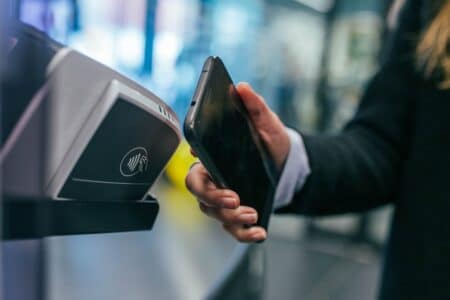
Adopting simple habits can significantly strengthen your smartphone’s mobile security. The first step is to keep your device up to date, as updates regularly patch vulnerabilities exploited by malicious actors.
Screen locking serves as an essential first line of defense. This can be further strengthened through biometric authentication. The use of complex passwords remains highly recommended, particularly for sensitive applications.
Here are some concrete best practices:
- Enable automatic updates
- Limit app permissions
- Avoid using public Wi-Fi connections
- Always verify the source of notifications
- Regularly monitor your transactions
Data backup also plays a critical role. In the event of loss or theft, it enables rapid restoration. It is also recommended to have the ability to remotely disable access to banking applications.
Newzy Executive emphasizes a point that is often overlooked: response time. Immediate reporting of suspicious activity significantly limits the potential consequences. Mobile banking and smartphone security are part of a proactive approach where every user becomes an active participant in their own security.
Internal Organization and Professional Use Management
In a professional setting, mobile payment security does not rely solely on individuals. Businesses have a structural role to play. Newzy Executive highlights the organizational frameworks designed to regulate these practices.
Internal policies define the rules for using corporate smartphones. These may include application restrictions, access controls, or validation protocols. Mobile Device Management tools, often referred to by the acronym MDM, allow for remote monitoring of devices.
Employee training remains a decisive lever. Raising awareness about fraud risks, particularly through attack simulations, improves vigilance. Newzy Executive regularly shares analyses on these practices, contributing to a broader dissemination of knowledge.
Information monitoring constitutes another key pillar. Threats are evolving rapidly, and businesses must continuously adapt their frameworks. This holistic approach—combining technology, procedures, and internal culture—significantly reduces risk.
Perspectives and innovations in mobile banking and smartphone security

Mobile banking and smartphone security continue to evolve through the integration of new technologies. Behavioral authentication, for instance, analyzes usage habits to detect anomalies, relying on subtle signals such as typing speed and navigation patterns.
Artificial intelligence is also playing an increasingly vital role in fraud detection, enabling the identification of atypical patterns in real time. Meanwhile, passwordless systems are gaining ground, reducing the risks associated with credential theft.
Challenges surrounding personal data protection remain central. Regulations are increasingly strictly governing the use of sensitive data. For professionals, this necessitates the constant adaptation of both tools and procedures.
Newzy Executive observes that these transformations are redefining user behavior. Mobile banking and smartphone security are becoming a dynamic ecosystem where vigilance must be constantly updated.