
Previous Story
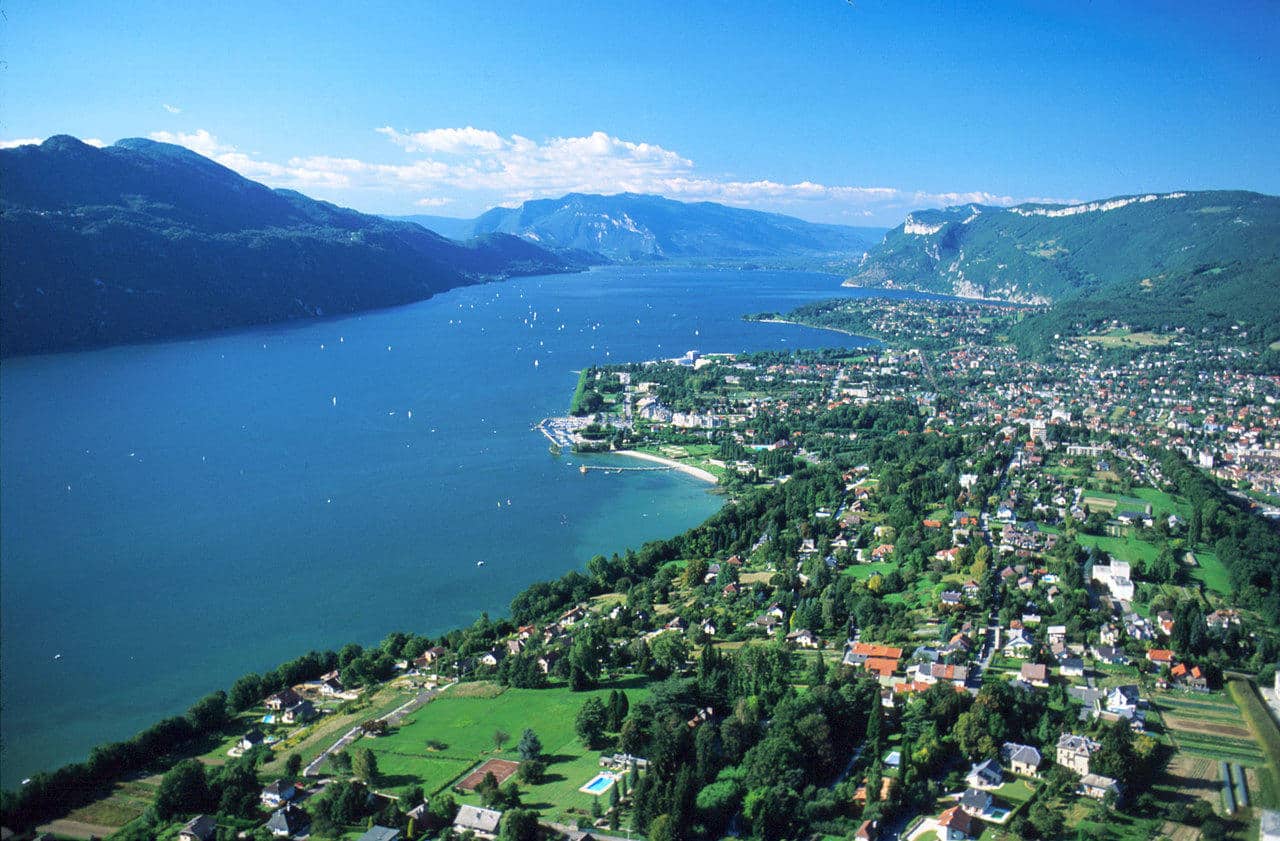
Aix-les-Bains: A Spatially Diverse Thermal Resort
Posted On 30 Jan 2017
Comment: 0
An essential destination on the shores of Lake Bourget, Aix-les-Bains—or simply Aix—is one of France’s most beautiful spa towns. Although known as a “water town,” it also offers a wide array of activities and discoveries that are equally captivating.
A favorable situation
Located on the shores of Lake Bourget in the Auvergne-Rhône-Alpes region, Aix-les-Bains is home to France’s largest freshwater marina. With a population of approximately 30,000, it is the second-largest city in Savoie, bordering Chambéry and Annecy. Thanks to its prime location, Aix boasts many different facets: a historic town, a modern urban area, a “flowery city,” and a gastronomic destination. The city is generally divided into two parts: the “lower town” to the west, built along the lakeshore, and the “upper town,” situated on the heights, which serves as the city center. The municipality is easily accessible due to its strategic position, served notably by the A41 and A40 motorways, as well as departmental roads 991 and 1201. It was also one of the very first European cities to feature a railway station. Located west of the city center, the Aix-les-Bains Le Revard station connects the city to neighboring municipalities and major European metropolises. Air travel is primarily provided by the Chambéry-Savoie Airport, located in the commune of Volgans.
Aix-les-Bains: A Historic City
Although Aix has held the title of “City of Art and History” since 2014, it remains a city spanning all eras. According to archaeologists, the area has been inhabited since the Neolithic period. However, it was primarily during the Roman era that the city began to flourish. The Romans greatly valued the quality of its waters, which is why they erected a large thermal complex as early as the 1st century, the remains of which are still visible today. Later, the Romans built the “Temple of Diana” and many other bathhouses. During the Middle Ages, Aix-les-Bains has become a small provincial town. It gradually expanded until a massive fire devastated more than half of the area in the 18th century. Thanks to its large lake, several boats regularly serve the town. Visitors are captivated by its thermal waters and its rich cultural, architectural, and historical heritage. This, in turn, has contributed to the growth of tourism and the expansion of its territory.