Previous Story
Our 3 top tips for choosing the right laser pointer
Posted On 16 Oct 2017
Comment: 0
A versatile tool, the laser pointer has its place in event planning, communications, the military, astronomy, security, and even for everyday household needs. While it was used primarily by keynote speakers in the 1990s, the laser pointer has since become a highly popular tool suitable for a wide range of applications. If you are looking to purchase a laser pointer, we can assist you through our in-depth analysis of product features. Before making your purchase, here are all the criteria you should consider to help guide your choice.
Wavelength based on laser pointer color
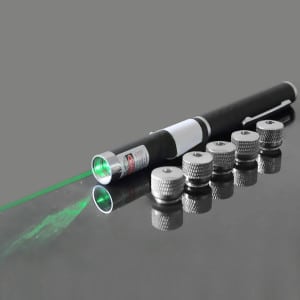 It is important to note that laser pointer features a wavelength expressed in nanometers (nm). This wavelength determines the laser’s color, which can be blue, green, red, or specifically yellow. The vibrancy of these colors depends on the quality of the laser pointer. The required wavelength values are 660 nm for red, 532 nm for green, 473 nm for blue, and 593.5 nm for yellow.
Please note that color does not determine a laser’s level of danger. To determine if a laser pointer is harmful to the human eye; instead, one should refer to the beam’s power, which can damage the retina. Please note that lasers are strictly regulated by law; these regulations define several classes based on power levels and specify the potential damage to the human eye. Always opt for the minimum power required to meet your needs to prevent unforeseen accidents.
Choosing Power
If you are using a laser pointer for entertainment purposes, a standard 3 to 5 mW laser pointer is more than sufficient. However, professional applications require higher power levels depending on the user’s field. Furthermore, when pointing at objects on a screen, a 35 mW laser pointer can provide highly satisfactory precision. It is worth noting that laser pointers can reach power levels of up to 100kW, which is 250,000 times more powerful than standard pointers.
To this end, you must avoid pointing the laser directly at your eyes, as this can cause severe eye injuries leading to blindness. We recommend researching current regulations beforehand to determine the minimum power required to meet your specific needs. The standard is divided into five classes, which categorize the beam’s level of danger and the potential damage it can cause upon contact with the retina.
Light Beam Stability
Generally, laser pointers are not built to last; their power output diminishes over time, as does the quality of the beam. However, if you are looking for a durable tool, choose laser pointers that offer high beam stability for extended periods of use.