Previous Story
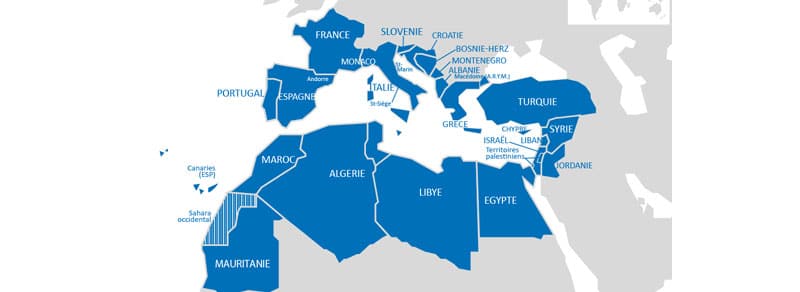
L’Union Pour la Méditerranée, où en est-on ?
L’Institut de Prospective Économique du Monde Méditerranéen lancera à l’issue de la deuxième édition des Entretiens de la Méditerranée, à Hammamet, les 25 et 26 mai, des recommandations avant le sommet de l’Union pour la Méditerranée dix jours plus tard. Interview de Radhi Meddeb, directeur général de l’Ipemed.
De nombreux chefs d’entreprise, responsables politiques et représentants des réseaux professionnels sont attendus, les 25 et 26 mai prochains à Hammamet (Tunisie), dans le cadre de la 2ème édition des «Entretiens de la Méditerranée». À cette occasion, l’Institut de prospective économique du monde méditerranéen (Ipemed), think tank dirigé par Jean-Louis Guigou et Radhi Meddeb, lancera « sept projets pour le 7 juin », jour du second sommet de l’UPM qui doit avoir lieu à Barcelone. Cet appel s’articule autour de l’énergie, l’eau, la prospective Méditerranée 2030, le brassage des élites, l’agriculture, la libre circulation et la finance. Radhi Meddeb, directeur général de l’Ipemed, analyse l’évolution de l’UPM.
Où en est l’Union pour la Méditerranée ?
Radhi Meddeb : L’UPM c’est tout d’abord un processus collectif et diplomatique lancé il y a deux ans par Nicolas Sarkozy. L’initiative suit son cours mais connaît aujourd’hui des difficultés liées à la situation des régions concernées, qui ont du mal à se retrouver toutes autour d’une même table. Le secrétariat général n’est pas encore en place, ce qui crée des crispations. Nous sommes encore trop dans l’effet d’annonce. Mais ce processus s’inscrit dans la durée, l’Europe ne s’est pas construite en un jour. Au-delà de cette dimension institutionnelle, nous sommes face à un processus économique déjà existant. Les chefs d’entreprise se rencontrent de plus en plus et partagent un diagnostic. Sur ce plan, les choses avancent.

Cette union constitue-t-elle une réponse à la crise ?
R. M. : Elle est une réponse à des besoins économiques qui découlent de la mondialisation. Le cycle de Doha, qui doit réguler les échanges commerciaux mondiaux, est en panne. Mais le dialogue avance au niveau régional. Par ailleurs, l’Union européenne a compris, avec la crise entre la Russie et la Géorgie, les limites d’une construction vers l’Est. La Méditerranée est indéniablement un réservoir de croissance pour l’Europe.
Quels sont les défis aujourd’hui entre l’Europe et l’Afrique ?
R. M. : Ils portent à la fois sur l’eau et l’énergie. À l’issue des entretiens de la Méditerranée, nous lancerons un « appel à 7 projets pour le 7 juin ». Par exemple, sur le plan financier, il nous paraît nécessaire de créer une banque de l’Union pour la Méditerranée, inspirée du FMI. Il faut changer la perception des Européens qui voient encore trop dans la rive Sud de la Méditerranée une zone à risques. Un chiffre illustre cette méfiance : l’Europe réserve 2 % de ses investissements mondiaux aux régions méditerrannéennes. Tandis que l’Amérique du Nord investi 20 % en direction des régions du Sud comme le Mexique.
L’UPM a connu quelques déboires depuis sa création. Quel est son avenir ?
M. : Aujourd’hui, les chefs d’entreprise n’attendent pas les politiques pour avancer. On le voit déjà avec les flux d’épargne des migrants. Ces derniers envoient en moyenne 10 milliards d’euros par an vers leurs pays d’origine. C’est un gisement colossal. Le Parlement Européen veut donner de la vigueur à l’UPM car il considère que la Méditerranée offre des perspectives de croissance face à la crise. L’Europe est dans une situation économique difficile mais elle doit justement trouver un intérêt en s’appuyant sur ces régions du Sud. Tout ce qui manque au Sud est au Nord et tout ce qui est au Nord peut être au Sud. Il est nécessaire d’avoir une solidarité bien pensée dans l’intérêt de tous.
Le site de l’Ipemed