
Previous Story
How to safely fell a tree: A step-by-step guide
Posted On 09 Dec 2019
Comment: 0
Tree felling is a dangerous and highly delicate operation. If not performed according to proper safety standards, it poses a serious risk of causing severe accidents to those nearby. Consequently, executing this task requires the expertise of a professional, experienced arborist.
Equipping yourself with the necessary tools for the task at hand
Before work begins, it is essential to ensure that all the necessary tools for felling are on hand. Above all, you must ensure that your equipment is reliable to prevent any risk of accidents caused by material failure.
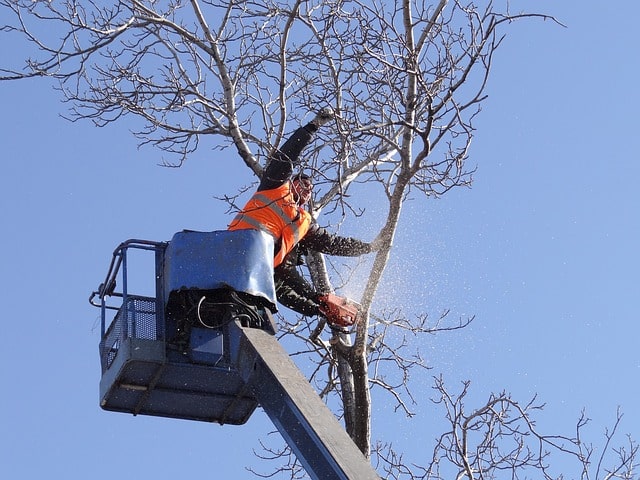
First and foremost, it is essential to be equipped with all necessary safety gear to protect against any potential accidents. Indeed, every professional in the field like this experienced tree trimmer in the Ardennes is equipped with Personal Protective Equipment (PPE). This includes a safety helmet with a visor, gloves, earplugs, cut-resistant clothing, safety shoes, and a harness.
Next, the craftsman must equip themselves with the necessary tools for felling the tree. They will require a chainsaw, a saw, pruning shears, a lopper, pruning claws, felling wedges, and lifting hooks.
Various tree felling techniques
There are two ways to fell a tree: traditional felling and specialized felling.
Traditional felling involves cutting the tree from its base. During this process, it is essential to perform precise calculations and meticulous work. This method is not recommended for gardens or urban areas, as the tree runs the risk of falling in an unpredictable direction.
Specific felling, on the other hand, involves cutting the tree into sections to determine its subsequent fall direction. This technique is best suited for narrow environments or confined properties.
The essential steps for tree felling
To ensure a perfect tree felling, it is important to follow several key steps.
First and foremost, preparation is key. The professional must ensure that the area where the felling will take place is clear of any obstructions. Therefore, the ground surrounding the tree to be felled must be cleared of undergrowth. Most importantly, it is crucial to verify that there are no significant obstacles, such as overhead power lines, roads, or buildings, in the vicinity of the tree. If necessary, the arborist may choose to set up warning signs.
Next, the direction of the tree’s fall is assessed to ensure the safety of property and people in the surrounding area. This step requires precise calculations to accurately determine the direction in which the tree will fall. Several parameters must be considered in these calculations, including the tree’s height, its branches, and its growth pattern. The worker must also account for wind direction and strength, as these factors can significantly influence the tree’s fall.
Third, the tree must be limbed, which involves removing the twigs and branches to facilitate ground-level work and ensure the felling process is carried out safely.
Finally, the tree felling process begins. This operation is carried out using a cable, a chainsaw, and a vehicle. The cable is attached to the lowest branches of the tree, after which the worker makes several notches into various parts of the trunk.
The operation will then conclude with the tree being felled using a chainsaw.