Previous Story
Digitalizing Receipts: A More Eco-Friendly Solution?
Posted On 19 Jun 2026
Comment: 0
Why implement digital receipt management?
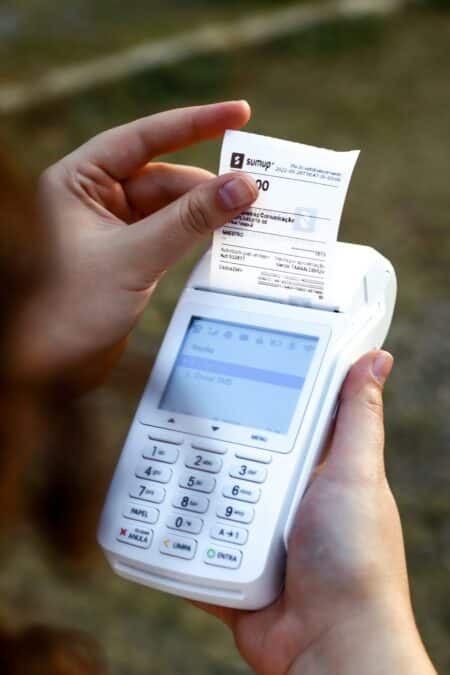
A law that should be implemented 2023 is set to mandate the digitalization of receipts for purely ecological reasons. But will the alternatives to these receipts be less polluting? This is the question many companies are asking in anticipation of this law.
Digitalization is an increasingly recurring phenomenon and will very soon target the sales receipt. This decision stems from la “anti-waste” law » passed in France in 2020. Its purpose is to increase the share of reusable packaging compared to single-use packaging.
Starting in 2023, retailers will no longer be required to provide a receipt unless explicitly requested by the customer. Even at the risk of being replaced by their digital counterparts, the law will indeed be implemented in January.
The end of the printed receipt, expected by 2023
By CNEWS Published on 04/20/2022 at 6:01 PM – Updated on 04/20/2022 at 6:01 PM
Is it truly beneficial for the environment?

This decision regarding sales receipts is also no coincidence. Figures published by France bleu indicate more than 600 rolls per year used to print receipts. It would be approximately<0xC2><0xA0> 30 billion the ticket and receipt would be printed every year according to government data.
In addition to their carbon footprint, these rolls contain substances that can become harmful in the long term to both checkout staff and customers.
The most likely alternative to the receipt would be digital tickets sent to the buyer’s email inbox immediately after the transaction. But will this alternative reduce the ecological impact of these transactions?
Data proves that this change could indeed have harmful effects on the environment. Indeed, on average between 4 and 19 grams of greenhouse gases and approximately 3 centiliters of water which are sent via email. It is only<0xC2><0xA0> 2 grams of greenhouse gases and 5 centiliters of water for a standard receipt.
These figures will, however, vary depending on several factors. For the standard ticket, it is the composition and content of the ticket, which will assign it a specific pollution rate. For digital tickets, the calculation will be performed differently. It is the size of the email (in bytes) that determines its environmental impact. The storage of these emails can also very quickly become a significant source of pollution; the more emails that are stored, the greater their environmental impact.
The Shift Project association is set to highlight this phenomenon while simultaneously proposing a solution to address it. The association has suggested implementing an automatic deletion system after a certain period. If properly executed, such a system could justify the digitalization of sales receipts.
The role of points of sale

There is, however, another issue related to the digitization of receipts: data collection via email. Indeed, to receive your email following a purchase, you must be registered in the databases of the location where you are making your purchases. Many people believe that this will to streamline marketing processes for brands and leverage this new system to enhance their communications.
To date, it is<0xC2><0xA0> impossible to truly know whether this change will benefit the environment. Stay tuned in January 2023 for the answer.