Previous Story

Can Plexiglass Stop COVID-19?
Posted On 07 Oct 2020
Comment: 0
When the World Health Organization declared COVID-19 a pandemic in mid-March, the management of Wild Adventures in Cannes, Alpes-Maritimes, knew they had to protect both their employees and their customers. Consequently, they implemented mandatory mask-wearing and installed plexiglass shields at every service counter where customers drop off their clothing. These screens allow customers and staff to see and communicate with each other easily, without the fear of sneezing or coughing toward one another.
“We installed them almost immediately,” explains Paul Lanos, Head of Cleaning. And this has not gone unnoticed by the employees. “I feel safer, knowing that I work for people who care not only about the health of their customers but also that of their employees,” explains Sandrine, one of the staff members.
Plexiglass sneeze guards appear to be everywhere these days: in grocery stores, dry cleaners, restaurant storefronts, discount shops, and pharmacies. They are recommended by the WHO, among other organizations.
“Grocers were among the first retailers to adopt plexiglass window shields,” says David Leimare, spokesperson for the Association des grossistes des A-M, an industrial group representing approximately 300 retail companies operating over 2,000 stores. He notes that nearly all grocers have done so, without any official recommendation from our association.
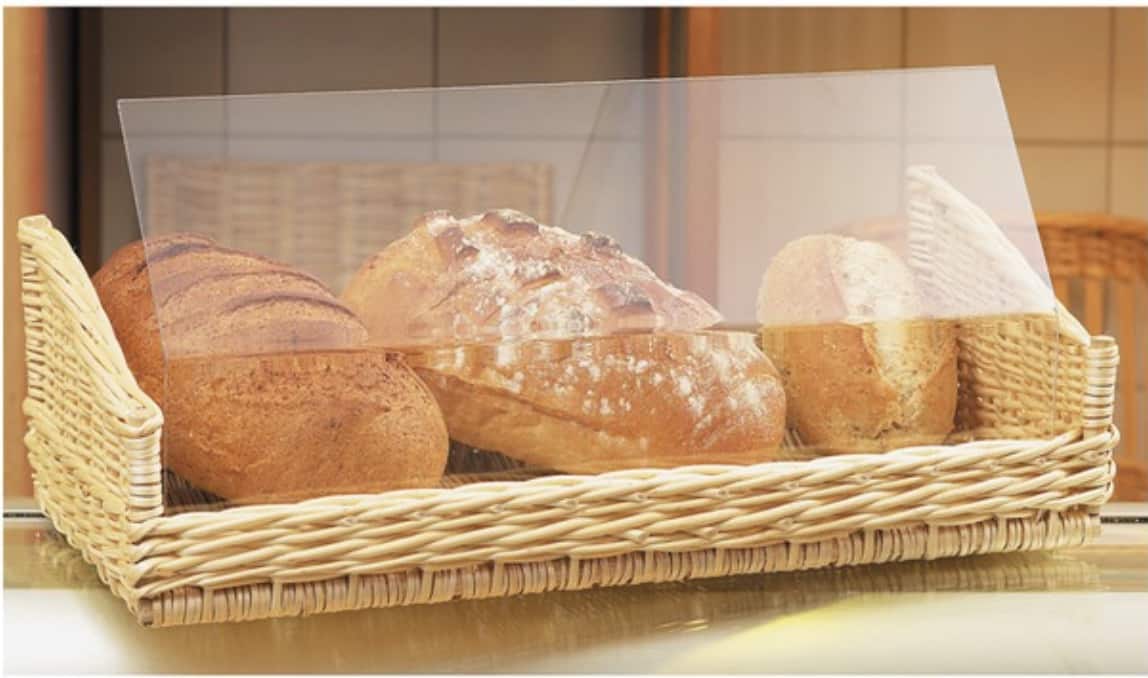 This is also true on a national scale. The association surveyed its members at the onset of the pandemic and found that 84% of respondents had installed plexiglass window shields in their stores. While the association did not issue official guidelines regarding barriers, “we advised our members to follow Government directives,” it stated.
Due to COVID-19, the plexiglass trade is now booming. Plexiglass sales have doubled or even tripled compared to the $250 million in sales recorded from March to May 2019, according to statistics provided by the International Plastics Distribution Association.
Are the barriers effective?
Despite the numerous recommendations regarding the plexiglass display case and its widespread use, experts believe that research regarding their effectiveness in slowing the spread of COVID-19 remains insufficient.
« To my knowledge, there are no peer-reviewed studies to determine the effectiveness of these barriers,” says Michel Arnaud, a doctor specializing in occupational, environmental, and toxicological medicine in Paris. Despite this, he notes, “intuitively, it makes sense that the plexiglass sneeze guards capture large droplets, which could reduce the risk of transmission.
He co-authored a fact sheet regarding the use of sneeze guards in the workplace. “Plexiglass is advantageous because it is readily available, easy to work with, smooth, transparent, and easy to clean,” he wrote. He further noted that plexiglass is more durable and cost-effective than other types of barriers, such as tempered glass or polycarbonate.
Mr. Arnaud stated that he views barriers as “a reasonable technical control” that serves as a supplement to, rather than a substitute for, masks and physical distancing.
Plexiglass could also soon be found on restaurant tables. A French company produces Plex’Eat, protective plexiglass bubbles that hang from the ceiling to surround diners’ heads.