Previous Story
How to Save Energy in Your Daily Life
Posted On 20 May 2020
Comment: 0
Does it feel like your heating bills are rising with every meter reading? Is your water and electricity consumption disproportionate to your actual needs? This is likely because your home is not energy-optimized. But there is no need to worry, as many solutions exist to reducing daily energy consumption. Solutions that require neither significant investment nor substantial capital, only a degree of vigilance. So, if you also wish to reduce your energy bills, here are a few simple habits that, if practiced daily, can help you save well over a hundred euros (or even more!) per year.
Reducing heating costs: the first step toward energy savings
According to studies, heating is the largest energy consumer in a household. In fact, it is estimated to account for, on average, 60% of energy expenditures of a household. It is true waste if you do not have proper thermal control of your home. To reduce your heating budget, it is therefore essential to start by performing renovations to improve energy efficiency.
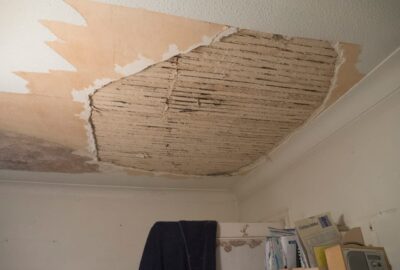
To insulate your home To achieve optimal results, it is essential to carry out the work in the correct order. The first step to consider is the insulation of the attic and the roof. Once this initial phase is complete, attention must then turn to the walls, windows, and flooring. While these are significant undertakings, they are currently more than affordable thanks to available government grants and subsidies.
Once your home is properly insulated, mastering your heating system is the next step in reducing your energy bills. To achieve this, you can equip you with a programmable thermostat to manage the temperature in every room of the home at any time of the day. Turning off the heating when no one is home, or lowering the temperature by a few degrees at night—these are simple actions whose long-term impact on our budget is often underestimated.
To further optimize your home’s thermal comfort, you should also consider:
- Maintaining your radiators.
- Installing a wood-burning stove.
- Isolate your piping.
Mastering water consumption: every drop counts
Washing up, doing the dishes, using the restroom, watering the plants… We evaluate an individual’s daily water consumption reaches nearly 150 liters. High consumption levels that are easy to reduce, provided certain rules are followed.
First, prioritize showers over baths. In fact, a shower uses 2 to 4 times less water than a bath. Wash your hands with cold water and do the same when rinsing your dishes. There you go—by adopting these simple habits, you should already be seeing significant energy savings.
Next, invest in equipment to control the temperature and flow rate of all your water outlets. Thermostatic faucets, water savers, and dual-flush toilets will, in fact, allow you to reduce water usage and eliminate waste. And do not forget to regularly monitor your facilities to ensure they are completely leak-proof.
Finally, do not overlook small gestures such as harvesting rainwater to water your plants or clean your car. This may seem insignificant, but every small action makes an impact, whether for yourself or for the environment.
Reducing electricity consumption: embracing a simpler lifestyle
With the vast number of household appliances and electronic devices, the electricity consumption has skyrocketed in recent years. Indeed, nowadays, owning a refrigerator, television, computer, washing machine, or microwave is nearly essential. These items are part of our daily lives and represent the minimum standard of comfort that every individual is expected to enjoy.
Unfortunately, taken together, these devices are extremely energy-intensive. It is therefore necessary to’optimize their consumption. To achieve this, you need to develop the right habits for each of your appliances, especially when it comes to major household appliances:
- Keep your refrigerator away from heat sources, optimize its storage, and defrost it every 3 to 4 months.
- Use only 40°C and short cycles with your washing machine.
- Only run your dishwasher when it is full and allow the dishes to air dry naturally.
- Unplug your phone and computer batteries when they are not in use.
- For lighting, prioritize natural light and energy-efficient bulbs.
- When it comes to your energy and gas providers, do not hesitate to let the competition work in your favor.
Conclusion: do not change, but optimize your consumption patterns
At first glance, these recommendations may seem like a significant investment of time and energy. However, once the bulk of the installations and optimizations are complete, it requires only a few minutes—or even less—of daily effort. These are negligible daily constraints when considering the long-term positive impact on both your energy bills and the environment.