
Previous Story

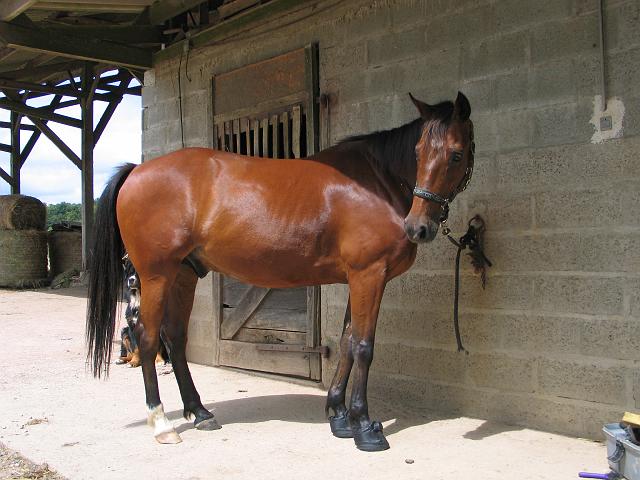
Everything You Need to Know About Hipposandals for Your Horse
Posted On 12 Jun 2019
Comment: 0
The benefits of hippo-sandals because they are removable, offer full coverage, and are flexible; they allow for the loading of the entire foot, provide true axial load when necessary, and enable traction adjustments on a daily or even hourly basis as conditions change.
To help you select the perfect pair for your horse, this guide brings together everything you need to know.
Why do horses wear horseshoes?
Wild horses do not need horseshoes. They consume their natural diet and roam freely across diverse and primarily dry terrain. The clogs wild horses tend to wear their hooves down naturally, and their constant movement across natural terrain causes the soles of their hooves to become thick and hard.
The heavy, soft soil of a pasture does not support the hoof in the same way as the arid lands from which horses originate. Domesticated horses, which subsist primarily on grain, walk on smooth or soft surfaces and have limited range of motion; as a result, they generally have thinner soles and more fragile hooves, which requires hippo-sandals high-quality scoot boots. Their hooves are more prone to cracking and splitting rather than wearing down smoothly and evenly.
Horses that must remain in stables face another challenge. Ammonia in collected urine softens and weakens the keratin of the hoof wall. This is one of the many reasons why proper stall management and cleaning are absolutely essential.
How do you decide if your horse needs shoes?
Keep in mind that “to shoe or not to shoe” is not a permanent decision. Your horse may require a specific type of shoe now, a different type under other circumstances, and no shoes at all in other situations.
To determine whether your horse needs shoeing, consider these seven factors with your farrier and/or veterinarian:
- Are your horse’s hooves smooth, strong, and well-formed?
- Does your horse have good conformation?
- Does your horse suffer from muscular, skeletal, or joint issues?
- Is your horse’s workload light, moderate, or heavy?
- Is your horse getting enough exercise?
- Does your horse have enough time to graze?
- Is your horse suffering from an illness, disease, or injury that requires shoeing?
If your horse is not currently experiencing any hoof issues and you do not anticipate any changes in its environment or workload, shoes may prove unnecessary. Check your veterinary and your blacksmith …regarding any concerns about hooves. Recognize your horse’s individual traits as well as your own needs. Listen closely to the advice of your veterinarian and farrier. By working together, you will surely find the ideal treatment for your horse.