Previous Story
Owner Warranty Obligations for Modular Homes
Posted On 07 Jan 2020
Comment: 0
Owners have their own warranty obligations that must be taken seriously, particularly those regarding routine care and maintenance.
Notify the responsible party
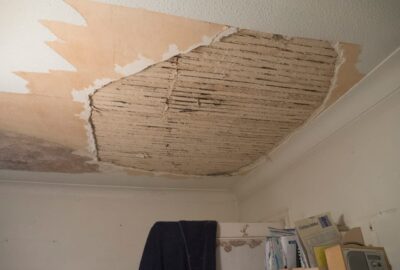
One responsibility often overlooked by owners is the obligation to communicate with the appropriate party in a timely manner when a warranty-covered service issue is discovered. Even a minor warranty claim can escalate into a serious and costly repair if reporting is delayed. For instance, if your front door leaks slightly every time it rains because the threshold needs adjustment, the finished flooring and structural framing can quickly sustain damage.

Service and Maintenance
The prefabricated modular homes are solid, but they are not indestructible. Expect your home to show signs of normal wear and tear over time, and accept the responsibility of repairing the inevitable results.
You will likely want to restore your home to its original condition as quickly as possible after the first heating season, as most of the wood’s settling and drying will have occurred by then. In a typical home, this fine-tuning usually takes a day or two and requires someone skilled in carpentry, drywall, and painting. Some of these standard adjustments may resurface in the following years, but they should be less noticeable and easier to repair.
If your modular home builder also served as your GC, it is reasonable to expect them to rectify these issues before your warranty expires. However, it is less clear who should be responsible for these repairs when the builder and the GC are separate entities. One portion of the drywall and molding may have been installed by the manufacturer, while another was installed by the GC. You could insist that each party repair what they constructed, but this assumes that all changes in a specific area of your home are attributable to the company that completed the work in that area, which is not always the case. For instance, if your home exhibits excessive cracking in several different locations, these cracks could have been caused by the manufacturer’s construction methods or by the way the GC leveled the threshold plate. Similarly, if there is significant shrinkage in the molding and hardwood floors installed by the manufacturer, it could be due to the materials used by the builder or to excess moisture that entered the home during the installation of the buttons. The best solution in this situation is to enter into a contract with your GC to handle all punch-list items, regardless of which company constructed the various parts of your home.
Your Board of Directors may be reluctant to take on this responsibility. Since they did not build the modules themselves, they may fear exposure to excessive risk. Furthermore, if they lack prior experience with modular development, they may feel unable to accurately forecast the time required for this process. A fair way to manage this is to agree to compensate them for their time and resources. Another solution would be to undertake the work yourself, provided you possess the necessary expertise.
Once the touch-up is complete, the GC should reseal any potential cracks in the drywall or the drywall tape. They might be tempted to simply cover them with compound or caulk to save time and money, but doing so will only cause the cracks to reappear. On the other hand, fine cracks in the mud covering the drywall tape can be filled with high-quality, paintable caulk. Small open miter joints or other small gaps between pieces of wood can be filled with wood filler or caulk; larger gaps must be corrected by removing and reinstalling the wood. Whenever possible, popped drywall nails should be driven deeper into the framing. If that is not possible, additional nails should be used. Any small gap between a wall and a kitchen or bathroom countertop must be filled with caulk.
Once these repairs are complete, the reworked areas can be touched up, ideally using paint or stain left over from the original button. If the CG must purchase new paint or stain, they may not be able to achieve an exact match with the previous application.
While it is not strictly necessary, you may want to wait until your house has fully settled and dried before painting the walls and ceilings in custom colors. If you choose not to wait, you should keep matching paint on hand to complete the touch-ups. However, you may still find it necessary to repaint an entire wall or ceiling in a room during the touch-up process to avoid visible shading caused by slight color variations.
You may also want to wait for your house to fully settle and dry before applying wallpaper or stencils. Regardless of when you apply them, you will be responsible for repairing any damage to the wallpaper caused by settling or the drying process.