
Previous Story
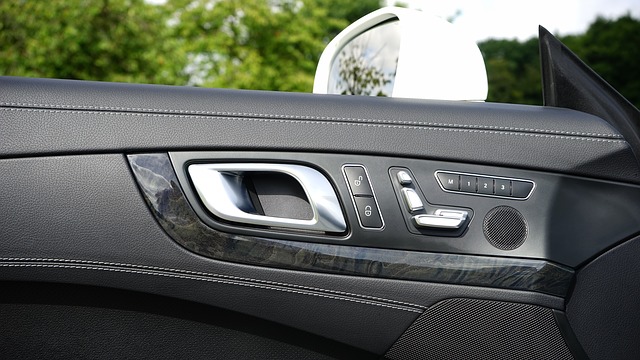
Understanding How Car Speakers Work
Posted On 19 Nov 2018
Comment: 0
Following the car stereo, speakers are the key components in a vehicle for enjoying a music “high-quality” audio on the road. It is as if the car were equipped with its own built-in hi-fi system! But do we actually know how these systems work to provide us with such satisfaction? For those curious to learn more, we will attempt to provide a simplified look at this sound emission technology.
Definition and usage
First and foremost, what is speaker ? To explain it in the most general terms, it is an audio device designed to produce sound from an electrical signal.
It is used in several fields, including computer systems, television, stereo systems, and other electronic devices and sound systems, such as car speakers.
As a result, it is used to generate and amplify the sound or audio for the listener. Currently, several models are available on the market, such as hanging speakers, subwoofer speakers, smart speakers, wall-mounted speakers, horn speakers, ceiling speakers, etc., each serving a different purpose. If you are still undecided on your next purchase of’car radio, pick up some tips on purchasing criteria before.
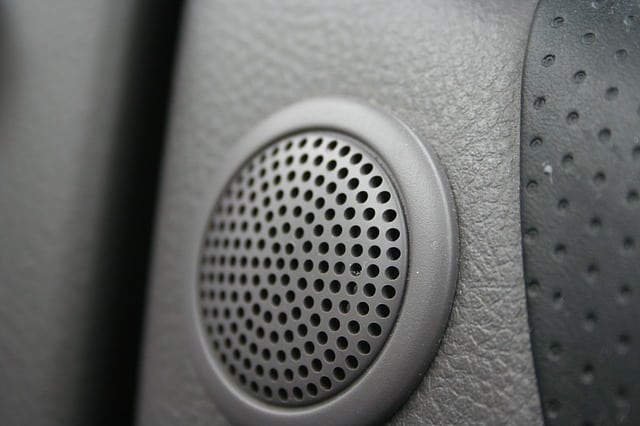
Understanding how car speakers work
Now that we understand what a loudspeaker is and exactly what it does, let’s explore how it works. To explain this, we turn to Manuel from the blog www.auto-schiess.fr
The loudspeaker functions by converting electrical energy into sound energy through its diaphragm.
This electrical energy follows a well-defined path before producing any sound. It is first detected by a coil, which generates a magnetic field from the current. This coil is then attracted or repelled by a magnet within the loudspeaker. It is this same oscillating coil, connected to the speaker diaphragm, that causes the device to vibrate, compressing the air and creating what is known as a sound wave.
Each sound wave is subsequently reproduced at a frequency corresponding to a specific speaker. This may include a subwoofer, a woofer (also known as a boomer), a tweeter, and so on.
Different types of loudspeakers
Despite the wide variety of car speaker models available on the market, there are actually only two types:
On one hand, coaxial speakers are a notable option. These often feature a 2-way or 3-way design—comprising a woofer, a midrange, and a tweeter for 3-way models—all assembled along a single axis. Their primary advantage lies in their compact design and ease of installation. Consequently, many car owners use them to replace factory-installed speakers located in the doors or on the vehicle’s rear parcel shelf. They are available in two shapes (round and elliptical) and come in various sizes.
On the other hand, there are the kits paths They consist of separate components, including the woofer, and sometimes the midrange and tweeter, which, unlike those found in coaxial speakers, are positioned independently of one another. The advantage of 2-way component kits? Their placement within the vehicle provides a more pleasant sound reproduction. As for 3-way component kits, the strategic positioning of the speakers throughout the car delivers optimal sound reproduction.
Additionally, subwoofers can also be included in the list, even though they are rarely mentioned. This type of speaker is larger than the first two. Consequently, they are installed in the car’s trunk, where they are dedicated solely to low frequencies.