
Previous Story
Le tourisme, remède anti-crise du Portugal
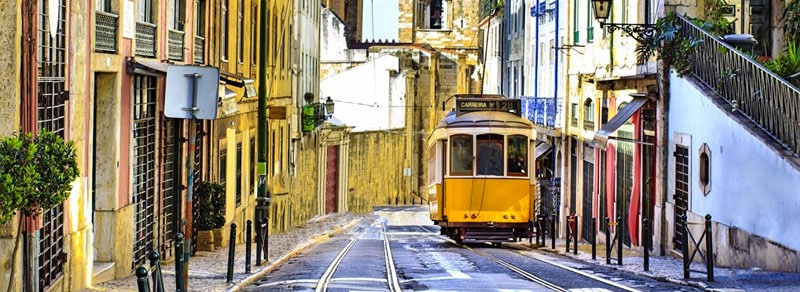
Le mythique tram de la ligne 28 qui se fraie un chemin à travers les ruelles étroites et escarpées de Lisbonne ne désemplit pas. La Ville blanche, tout comme l’Algarve, est prise d’assaut par les touristes étrangers, une aubaine pour le pays en crise.
« Le tourisme au Portugal a connu durant les mois écoulés la croissance la plus élevée de ces dernières années », a assuré le ministre de l’Economie Antonio Pires de Lima, évoquant une hausse de « près de 10% ».
Les recettes générées par les touristes étrangers ont grimpé de 8,2% à 3,7 milliards d’euros au premier semestre. Signe de la crise dans le pays voisin, il y a eu moins d’Espagnols (-3,8%), mais plus d’Américains (+16,8%), Allemands (+14%) et Français (+10,8%).
« On a hésité entre Barcelone, Rome et Athènes, mais la Grèce est en difficulté. Ici on n’a pas l’impression d’être dans un pays en crise », explique Christian Fièvre, un artisan à la retraite d’Orléans (centre de la France) qui flâne avec sa femme Maryse sur l’Avenida da Liberdade au coeur de Lisbonne.
« Ils vont s’en sortir, ce sont des gens travailleurs qui ne se plaignent jamais. Voyager ici, c’est une manière de les aider », commente-t-il.
Le tourisme, qui pèse 9,2% du PIB, « est le secteur qui contribue le plus à la sortie de crise du Portugal », relève le secrétaire d’Etat au Tourisme, Adolfo Mesquita Nunes. Après deux ans et demi de récession, le Portugal a renoué avec la croissance au deuxième trimestre (+1,1%).
L’afflux de touristes a donné des ailes à la compagnie aérienne nationale TAP, qui a transporté en août 1,11 million de passagers, un record mensuel historique.
« Nous comptons entre 5 à 10% de clients de plus que l’an dernier, surtout des Etats-Unis, de France et d’Allemagne », confie Carlos Jesus, cogérant de l’Albergaria Senhora do Monte, perchée sur la plus haute des sept collines de Lisbonne.
Mais du côté des recettes, l’hôtel, dont la vue plongeante sur le Tage et les façades blanches et ocre de la ville a attiré des célébrités comme Alain Tanner et John Malkovich, n’a pas encore renoué avec les années fastes.
Prix en baisse
Au total, 3,6 millions de touristes étrangers (+8,1%) ont visité le Portugal pendant les six premiers mois de l’année.
Le Portugal a su tirer profit des turbulences en Egypte et Tunisie: « la sécurité a joué un rôle important, nous avons récupéré les touristes qui ont délaissé ces destinations », explique à l’AFP Frederico Costa, président de Turismo de Portugal, l’organisme chargé de la promotion touristique du pays.
La baisse des prix, souvent évoquée par les touristes pour expliquer le choix du Portugal, n’est « pas le critère le plus décisif » pour M. Costa, d’autant que « les tarifs dans l’hôtellerie ont commencé à remonter ».
Le Portugal se défend d’être une destination « low cost »: le pays a développé l’hôtellerie de luxe, s’est forgé une réputation de destination golfistique et mise à fond sur le tourisme culturel.
Mais la restauration reste bon marché. « Le Portugal est moins cher que le Japon, on mange très bien et les portions sont énormes », raconte Masako Matsuda, une employée d’assurance d’Osaka (Japon) qui a fait 17 heures de vol pour déguster à Lisbonne les célèbres pasteis de nata, ces flans crémeux à la pâte feuilletée.
Les plages de sable fin de l’Algarve ont également profité de l’embellie touristique. Les visiteurs allemands (+21,8%), britanniques (+10,4%) et français (37,9%) y ont battu des records d’affluence, alors que les vacanciers portugais se sont fait plus rares (-4,9%).
« Les taux d’occupation ont certes augmenté, mais les recettes ne suivent pas forcément », nuance Eliderico Viegas, président de l’Association de l’hôtellerie de l’Algarve (AHETA). A son grand regret, « les prix sont bas et les touristes dépensent moins ».